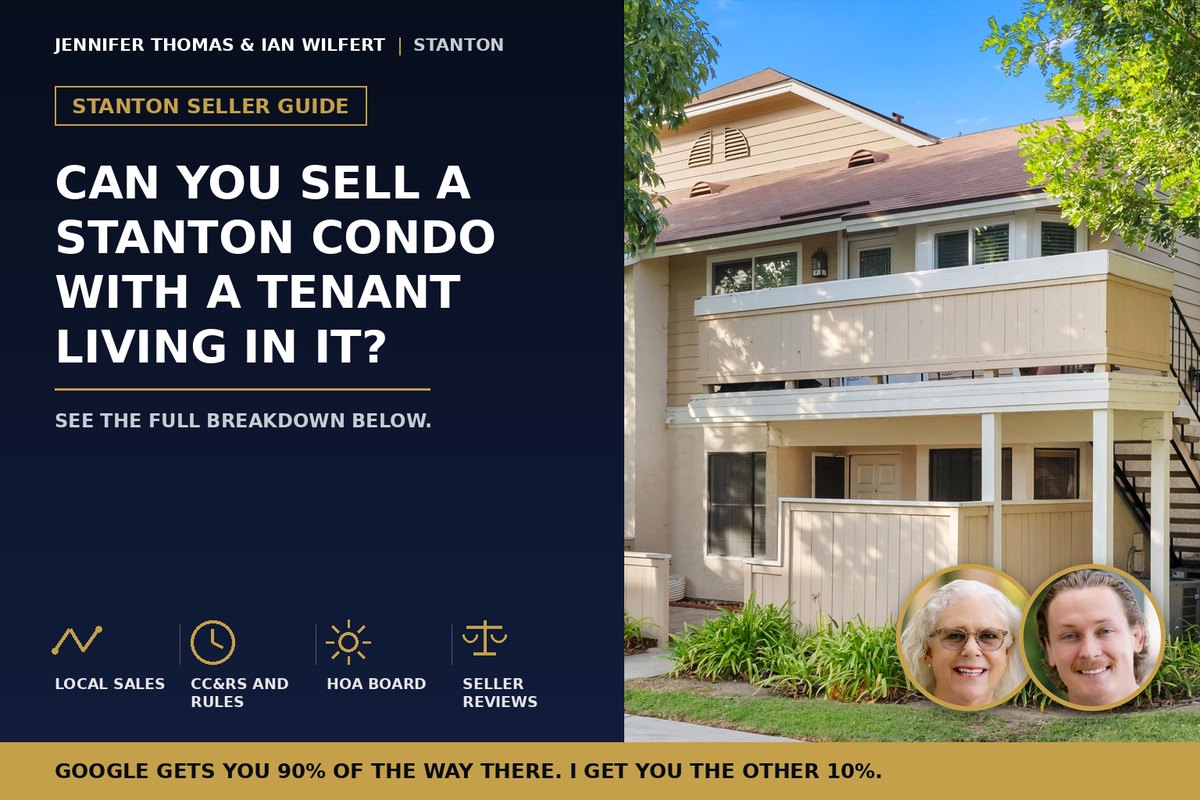
Quick Answer: Yes, you can sell a Stanton condo with a tenant living in it, and plenty of owners do. The lease generally stays in place after the sale, the tenant has rights about showings and notice, and the buyer pool shifts toward investors unless the unit will be vacant at closing. The best approach depends on your lease, your tenant and who you want to sell to.
A lot of Stanton condos and townhomes are owned by investors, including many in Crosspointe Village. Sooner or later, many of those owners want to sell, and the tenant is still living there.
That is not a problem by itself. It just changes the plan. Here is how I walk owners through it.
What Happens to the Lease When You Sell a Stanton Condo With a Tenant?
In California, a fixed-term lease generally survives the sale. The new owner steps into your shoes as the landlord, and the tenant can stay until the lease ends under its terms.
Month-to-month tenancies work differently. They can be ended with proper written notice, and the notice period is generally longer for tenants who have lived there a year or more. State just-cause rules can also apply, and a sale on its own is generally not a reason to end a tenancy. Some individually owned condos are exempt from parts of those rules, but only if the right notice was given.
This is where I always suggest a short call with a landlord-tenant attorney before you list. The rules depend on your lease, how long the tenant has been there, and whether your unit qualifies for an exemption.
Should You Sell Occupied or Vacant?
| Option | Who it attracts | Tradeoffs |
|---|---|---|
| Sell with the tenant in place | Investors who want rental income from day one | Smaller buyer pool, showings depend on tenant cooperation, photos can be harder |
| Wait for the lease to end, then sell vacant | Owner-occupants and first-time buyers, plus investors | Larger buyer pool and easier showings, but lost rent while it sits empty |
| Negotiate an early move-out | Same as vacant | Faster than waiting, but it is voluntary and costs you something to agree on |
My general view: if the tenant is cooperative, the lease is ending soon and the unit shows well, selling vacant usually reaches the most buyers. If the lease has months left and the tenant pays on time, selling to an investor with the tenant in place can make more sense than waiting. There is no single right answer; it depends on the lease, the tenant and your timeline.
In a community like Crosspointe Village, where many buyers are first-time owner-occupants, a vacant unit often reaches more buyers. But a well-kept unit with a good tenant on a solid lease can be exactly what an investor is looking for.
How Do Showings Work With a Tenant?
California lets a landlord enter to show the unit to prospective buyers, with reasonable written notice. Twenty-four hours is generally considered reasonable. Showings should happen during normal business hours unless the tenant agrees otherwise.
The legal minimum is only part of it. A tenant who feels respected makes showings easy. A tenant who feels ambushed can make every showing a struggle.
- Talk to the tenant early. Before the sign goes up, explain what is happening and what to expect.
- Agree on showing windows. A few set times a week is easier on everyone than constant requests.
- Keep notice in writing. Every showing, every time.
- Plan photos carefully. Schedule them when the unit is tidy, and avoid personal items.
- Thank them. Some owners offer a small rent credit for cooperation during the listing period.
In a gated community, also plan for gate access. Buyers and their agents need a simple way in. That is one more thing a tenant should not have to manage.
What Paperwork Changes Hands at Closing?
When a unit sells with a tenant in place, a few items transfer to the buyer through escrow:
- The lease and any addenda. The buyer should review these before removing contingencies.
- The security deposit. It generally transfers to the new owner, and the tenant is notified in writing.
- Tenant estoppel or rent information. Buyers often ask for written confirmation of the rent, deposit and lease terms.
- Notice to the tenant. The tenant needs the new owner’s name and where to pay rent.
Your HOA may also want updated tenant information once the new owner takes over. If you are deciding whether to sell at all, my post on whether to sell or keep a home as a rental walks through that choice.
What Usually Makes an Occupied Sale Go Smoothly
Picture two owners selling similar Crosspointe units with tenants in place. The first talks to the tenant before listing, agrees on two showing windows a week, offers a small rent credit for keeping the place tidy and has the HOA documents ordered on day one. The second sends a notice the day the sign goes up and asks for showings on short notice.
The first sale usually goes far more smoothly. The difference is not the law, which is the same for both. It is communication, planning and respect for the person living there.
- Start with the lease. Know the end date, rent, deposit and any terms about showings before you list.
- Prepare the unit around the tenant. Touch-ups, a deep clean and a tidy patio, scheduled at times that work for them.
- Market to the right buyer. If the tenant is staying, describe the rent and lease clearly for investors.
- Have paperwork ready. Lease, deposit records and any rent ledger, so buyers can review quickly.
What to Know About Crosspointe Village Rentals
In Crosspointe Village, normal long-term rentals are allowed and short-term rentals are not. That makes it a common place for investor owners, and it means investors are a natural buyer pool when a rented unit goes on the market.
Investors look closely at a few things: the current rent compared to the market, how long the lease runs, the HOA dues and what they cover, and the condition of the unit. Having those answers ready helps your listing compete. I cover the rental rules in more detail in renting out a Crosspointe Village condo.
Questions to Answer Before You List a Rented Condo
- When does the lease end, and is it fixed-term or month-to-month?
- Is the rent close to what similar units rent for today? Investors will compare.
- Does the tenant want to stay, move or possibly buy? Some tenants make the best buyers.
- Does your unit qualify for any exemption from state rent rules, and was the required notice given? Ask an attorney.
- Where is the security deposit, and is it documented?
Answering these first helps you choose between selling occupied and selling vacant, and keeps surprises out of escrow.
When a Tenant Wants to Buy
Sometimes the best buyer is already living in the unit. A tenant who loves the home and the community may be interested in buying it. Ask early. A sale to a tenant can mean fewer showings, an easier timeline and no vacancy.
Final Thoughts
With the right plan, a rented condo can sell just as smoothly as a vacant one. The key is preparing early and respecting everyone involved.
Key Takeaways
- You can sell a Stanton condo with a tenant in place; a fixed-term lease generally stays with the property.
- Selling occupied favors investors, while selling vacant usually reaches more buyers.
- Tenants are entitled to reasonable written notice before showings.
- Talk to the tenant early and agree on showing windows to keep things smooth.
- Check your situation with a landlord-tenant attorney before listing.
Frequently Asked Questions
Can you sell a house with a tenant on a lease in California?
Yes. In California a fixed-term lease generally survives the sale, so the buyer takes over as landlord. The tenant can usually stay until the lease ends.
Does a tenant have to allow showings in California?
California law allows a landlord to enter to show the unit to buyers with reasonable written notice, generally 24 hours, during normal business hours. Cooperation goes much further than the minimum.
Can I ask my tenant to move out so I can sell?
It depends on the lease and on state just-cause rules. A sale alone is generally not a reason to end a tenancy. Some owners negotiate a voluntary move-out instead. Talk to an attorney before giving any notice.
What happens to the security deposit when a rental is sold in California?
It generally transfers to the new owner through escrow, and the tenant is told in writing who now holds it.
Do I have to tell my tenant I am selling?
You will need to give proper written notice before entering for showings, and early communication usually makes the sale go more smoothly.
Next Step
Own a rented condo or townhome in Stanton and wondering how to sell it? Call or text me at 714-415-5052, or email Jennifer@JenniferThomas.com. You can also read what more than 100 past clients have said in my Zillow reviews.
Google gets you 90% of the way there. I get you the other 10%.
Message me. You get me, not a team.
Jennifer Thomas and Ian Wilfert are Huntington Beach real estate partners at Seven Gables Real Estate, serving buyers and sellers across Huntington Beach and Orange County. Jennifer Thomas is a Huntington Beach real estate broker with 40 years of experience, over 1,100 closed transactions, and a reputation as one of Orange County’s most trusted listing agents and senior relocation specialists. Ian Wilfert specializes in first time home buyers, guiding clients through every step of the buying process in Huntington Beach and surrounding Orange County communities. Together Jennifer and Ian bring decades of established market knowledge and first time buyer expertise to every client they serve in Huntington Beach and Orange County. For the fastest response, contact Jennifer directly at 714-415-5052 or Jennifer@JenniferThomas.com. Ian can also be reached at 714-887-9560 or ianw@sevengables.com. Visit jenniferthomas.com. Jennifer Thomas DRE 00931959 | Ian Wilfert DRE 02096787.